5 Key Ways to Improve Your Nonprofit Website Redesign RFP (Outline included)
If you and your nonprofit organization are ready to start a website redesign project, you’ve probably heard the advice: “Start with a request for proposals!” Easier said than done, right?
Whether it’s your first time or your fifth, it can be tough to figure out what needs to go into a nonprofit website request for proposals (RFP)—and what to leave out. More importantly, how can you ensure that your RFP leads to a website redesign that truly reflects your mission and goals?
At IndieTech Solutions, we’ve partnered with dozens of nonprofit organizations on website redesigns. Most recently, we teamed up with the Institute for Policy Studies and shared our experience with nonprofit website RFP processes at NTEN’s Nonprofit Technology Conference (NTC) in Baltimore.
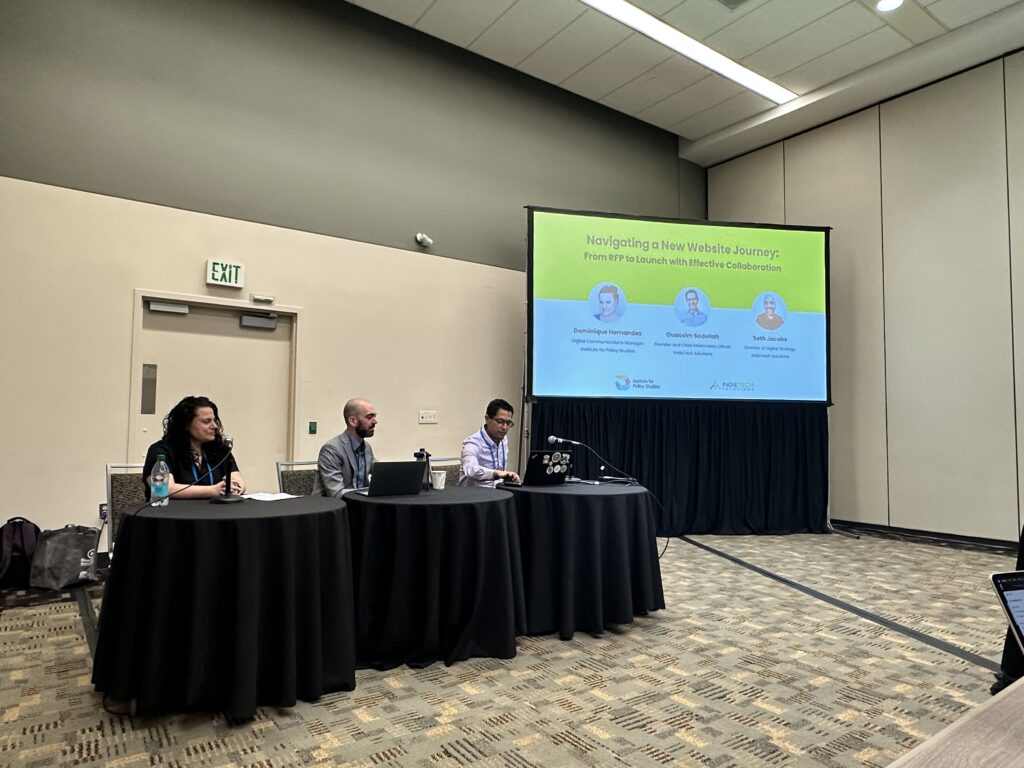
Based on that work, here are a few key takeaways to help you write an RFP that sets your website—and your nonprofit—up for long-term success.
1. Start By Listening
Before drafting your RFP for your nonprofit website, it’s crucial to gather insights from across your organization. These conversations will help ensure that your RFP accurately reflects your real needs and priorities.
First, identify the key voices who are central to your work, like your executive director, program leadership, and research staff. You will also want to hear from everyday site editors, such as your communications team, press staff, and even (especially) interns. Run short brainstorming sessions internally to surface pain points, required features, and content needs. You should reach out to your board of directors and membership if you want to learn from an external perspective on how your site is actually used.
At IndieTech, we facilitate this exchange of knowledge through our discovery process, but sending out a survey in your next newsletter or asking a few questions at the next conference you have coming up can help provide you with plenty of information to start the conversation and get your organization thinking.
Ultimately, this brainstorming process will help you identify and jot down some of your key website challenges, functionality requirements, and content plans that your redesign project will need. You now have three new sections to translate into organized, actionable RFP content!
2. Your Website RFP Should Reflect Your Organization
Remember: the agency you hire brings technical expertise, but you bring institutional knowledge. A strong nonprofit RFP isn’t just a checklist of functions, it should communicate your organization’s mission, goals, and the unique challenges your users face. Including examples of other websites you like (and why) can help to give us a sense of not only what you like now, but what you envision yourselves as in the future.
Who are your audiences? Do they have unique accessibility needs? What are you hoping that visitors learn and ultimately do when they visit your website? This context empowers your potential agency partners to propose creative, tailored solutions fit for you rather than generic bids.
Not long ago, we were invited to submit a proposal to a mission-driven nonprofit whose work was compelling and whose website was clearly in need of a refresh. But their RFP left us guessing. It listed standard needs, responsive design, an updated staff page, and an easy-to-manage backend, but offered little about the organization itself or its vision for the new site.
Fortunately, we had a chance to speak with the team directly and learn more about their design vision, their unique technical needs, and even some of their organizational quirks.
That conversation made all the difference. When you include background on your organization, ideas about how you want your site to feel, and who your users are, we can craft a proposal that fits your tone, values, and scope.
3. Be Transparent About Your Budget
Speaking of scope, we often hear organizations hesitate to include a budget in their RFP, with the primary concern being that they may be taken advantage of. While potentially risky, true, being vague about cost can backfire. Including a budget range, even a broad one, helps agencies scope realistic proposals that fit both you and them. The best nonprofit website redesign agencies will work with your budget constraints, regardless of what they are, if they are excited about working with you and fully understand your project scope and its needs from the beginning.
Let’s say your budget is $40,000-$65,000 for your nonprofit’s website redesign, but you’re not planning to share that in your RFP. For many agencies, this is quite a broad range that can not only ensure that you end up with a top-notch website, but could also include some features that your organization might want or need. This might include special accessibility requirements and language translation tools, more deeply embedded and integrated third-party applications to easily solicit donations and newsletter sign-ups, and even comprehensive content migration options to ensure both current and legacy content makes it over to the new site in an organized, informative way.
Without including your budget details, you will almost certainly receive more proposals than you know what to do with, with budget ranges that are either too high, too low, or don’t include key features you may (or may not!) know that you need or want. Even a broad range can help an agency further tailor their proposal to your needs and could even include some of those “wish list” items you mentioned in your RFP if they find them feasible to include. Being transparent helps you and your organization envision what your nonprofit website can become, working in partnership with your future web agency from the very start.
4. Plan for Launch, and After
At this point, your nonprofit website RFP should have all the details that you and your future agency partner will craft a modern, functional, and compelling new site. But what about when it goes live? Your RFP should clearly indicate the need for support during and after launch.
What that includes may vary by agency, but at a minimum, we recommend requesting at least one training session. A key goal of your RFP should be to ensure that your team can fully access and edit the site once the project is complete. That should be accomplished through both a hyper-friendly backend interface, and a robust exchange of knowledge, too.
Additionally, technical issues will arise and new tweaks will be found, especially as you get more new site visitors. Include a question or two about how long your agency partner will be available for support, what exactly they will address during that time, and if there are any additional costs associated with this added assurance.
The last thing that you want is to be out on your own with a new, unfamiliar website the day after you debut it to the world. Bugs and questions will always come up, and you want a responsive partner by your side, even after your new website is up and running.
5. A Redesign Isn’t an Ending
the tone for that ongoing evolution. It’s not just about building a site that works for today; it’s about creating a flexible, accessible platform that can adapt to your mission and your audience over time. Consider including options for an ongoing partnership with your agency for 6 to 12 months after launch, as well as planning for a potential “phase 2” or a future round of updates once you’ve had time to get familiar with your new site and gather ideas for improvement.
Building a Web Partnership, Not Just a Website RFP
Above all, take the opportunity to speak with and meet your agency before entering into a formal agreement. Look for agencies that communicate clearly, ask thoughtful questions, and demonstrate a genuine understanding of your organization and audience. Internally, define your roles early: Who will give the final feedback? Who will manage content revisions? Clear ownership will make your redesign smoother, more collaborative, and will help prevent the kind of back-and-forth that can lead to delays.
At the end of the day, an RFP is more than a procurement document—it’s the beginning of a partnership. While all of the above might help outline your wants and needs, there isn’t a space on that page for how you and your future agency partner will work together. Finding the right partner can be the difference between a good website and a great one.
Download the RFP Outline
Please fill out the form below to access the RFP outline.